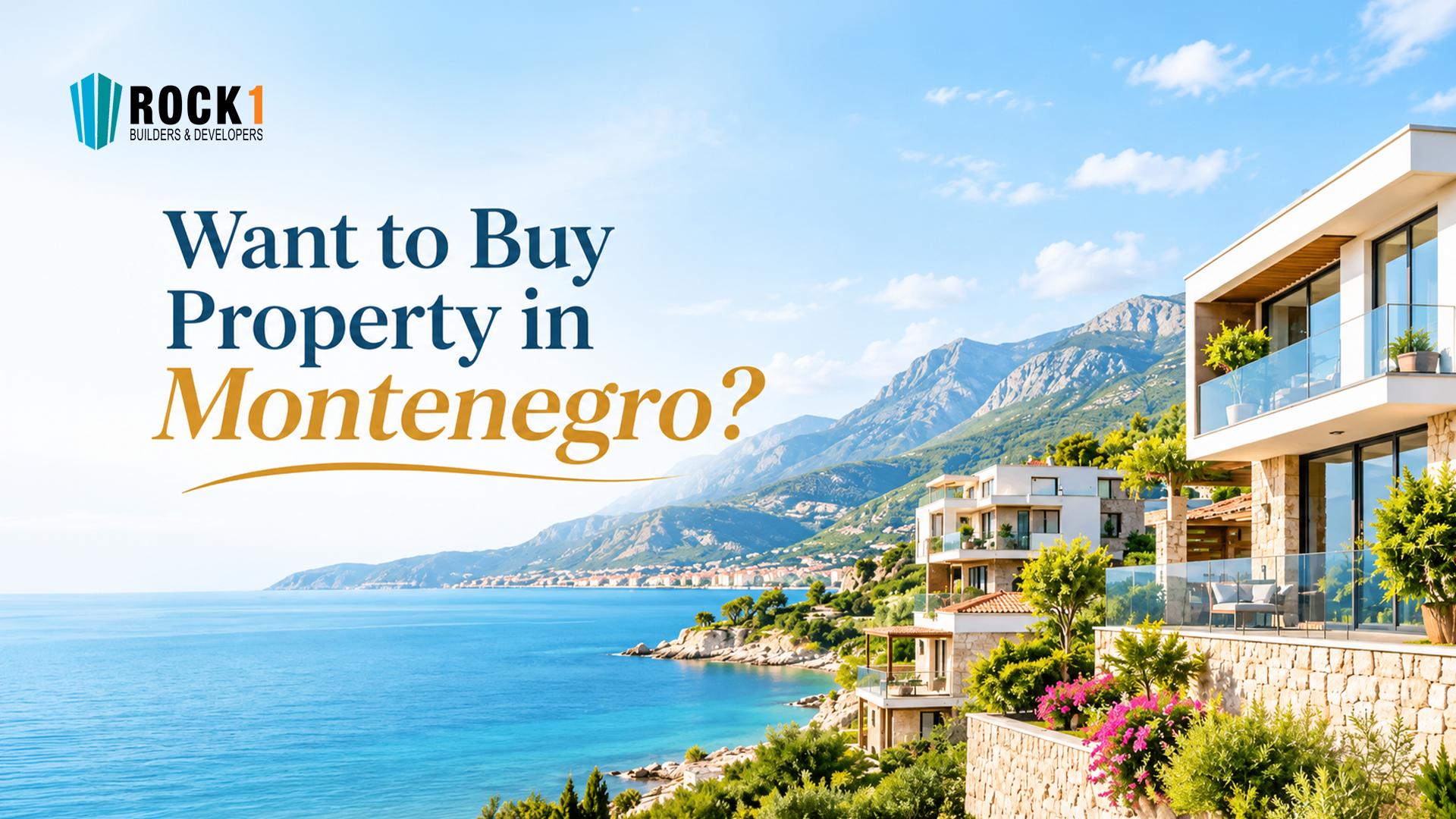
Planning to buy property in Montenegro as a foreigner? Learn the ownership rules, best locations, documents to check, purchase steps and taxes before you buy.
Picture an early swim at Dobra Voda before your first coffee of the day. For many international home buyers, that thought is where a move to Montenegro begins. This guide covers the rules and costs of buying on Montenegro’s coast.
Can Foreign Buyers Buy Property in Montenegro?
Yes. International property buyers can purchase on largely the same terms as Montenegrin citizens. A few land types and the residency route carry extra conditions.
Ownership Rules for Foreigners
- Foreign individuals and companies can buy apartments and houses outright.
- Agricultural land and forests are restricted for foreigners. The same applies to islands and land within 1 km of a land border.
- A foreign individual may buy up to 5,000 m² of farmland or forest when a house stands on it and forms the main subject of the sale.
- Buyers interested in larger rural plots should take legal advice on buying through a Montenegrin company.
Buying Without Residency
- Owning property in Montenegro does not require you to live there.
- Ownership can support a temporary residence permit that lasts one year and can be renewed. It does not give you the right to work.
- Since 17 January 2026, most non-EU applicants need a home valued by the Tax Administration at €150,000 or more.
- EU nationals are exempt from this threshold. The same applies to citizens of Iceland and Norway as well as Liechtenstein and Switzerland.
Is Montenegro a Good Investment?
The numbers behind Montenegro’s property market are encouraging, though seasonality and running costs deserve just as much attention.

Price Trends and Property Value
- Monstat recorded an average of €2,838 per m² for new coastal homes in Q2 2026.
- The same coastal average stood at €2,328 in Q1 2025.
- These averages come from signed contracts for first-time sales of new homes.
Tourism and Air Links
- Montenegro’s two international airports passed three million passengers by 18 September 2026. That milestone came about two and a half months earlier than when it happened in 2025.
- 20 new flight destinations have been introduced at Podgorica Airport in summer 2026.
- Overnight stays at coastal resorts constituted 92.1% of the total number of overnight stays at hotels and other accommodations in August 2026.
Things to Keep in Mind
- Tourism is seasonal. The number of arrivals at hotels and similar accommodation amounted to 264,475 in August 2026 compared to 41,317 in February 2026.
- Rental returns depend on the occupancy and running costs.
- Resale homes can carry permit or registration problems. Good investment properties pass full legal checks before any money changes hands.
Best Places to Buy Property in Montenegro
Old stone streets in Kotor. A lively summer in Budva. A calmer stretch of sand on the Bar Riviera. Your ideal base depends on how you want to spend your days.
Dobra Voda, Bar
- Dobra Voda is a seaside village on the Bar Riviera, about 8.5 km from Bar City.
- Podgorica Airport is 60 km away or roughly an hour by car.
- Bar has a major shipping port and a direct rail link to Belgrade.
- Bar Old Town and Skadar Lake are both within easy reach for day trips.
Other Popular Locations
- Budva: Montenegro’s best-known resort town with a busy summer season.
- Kotor: a fortified mediaeval town located within the UNESCO World Heritage site.
- Tivat: featuring an international airport and the Porto Montenegro marina.
- Podgorica: the capital city, where the average cost of a new house was €2,510 per m² in Q2 2026.
What Types of Property Can You Buy?
A flat, villa or a new build? The right property type depends on your intended personal use and rental goals.
Apartments and Flats
- Apartments suit buyers who want an easy-to-lock-up holiday base.
- Shared buildings carry upkeep costs. Don’t forget to enquire about the costs and how they are handled.
Villas and Houses
- A villa gives you private outdoor space and often a pool.
- Check the land category in the cadastre before you commit.
New-Build vs Resale
- A first sale from a developer generally includes 21% VAT in the price with no transfer tax due. Confirm this with your lawyer.
- Resale homes can be inspected as finished buildings. Transfer tax applies to these purchases.
How Much Space Does Your Budget Buy?
Square metres are the standard unit in Montenegrin listings, and a little arithmetic turns any price list into a realistic budget.
- A 50 m² coastal home at the Q2 2026 average comes to about €141,900.
- A 70 m² home at the same rate costs about €198,700.
- Averages hide wide gaps between locations and buildings.
- For residency the figure that counts is the Tax Administration’s valuation. It may differ from the price you pay.
- Add tax and fees to your budget before you make an offer.
Which Property Documents Should You Check?
Before any money moves, request documents that prove the ownership of the property and its legal construction.
- Title sheet (list nepokretnosti): indicates the owner of the property and a possible mortgage over the property.
- Building and use permits: make sure the home was built and approved legally.
- Cadastral plan: should match the size and boundaries you are paying for.
- Seller identity: proves the person or company selling has the right to do so.
Hiring an independent lawyer will help you examine all the documents concerning the property carefully.
How Does the Property Purchase Process Work?
The property buying process in Montenegro follows a clear order with a notary and your lawyer guiding you through stages.
- Pick a property and negotiate with the seller about the price.
- Create a local tax ID and open a bank account upon your lawyer’s advice.
- Make a down payment and sign the preliminary agreement.
- Perform due diligence with the help of your lawyer.
- Sign the final contract before a notary and pay the balance.
- Register ownership with the Real Estate Administration.
- Pay any transfer tax and register for annual property tax.
What Taxes and Fees to Expect?
New-build or resale? That one question decides most of your tax bill on purchase. Yearly ownership costs are far simpler to plan.
Purchase Costs
- Real estate transfer tax on resale homes is 3% on value up to €150,000.
- The rate is 3% up to €150,000, plus 5% on any portion between €150,000 and €500,000, and 6% on any portion over €500,000.
- The Tax Administration applies this tax to its own market valuation.
- Notary and legal fees come on top of the tax.
Ongoing Costs
- Annual property tax ranges from 0.25% to 1% of market value depending on the municipality.
- Rental income and capital gains are taxed at 15% under current rules. A local tax adviser should confirm your position.
Explore Rock 1 Builders’ Properties in Dobra Voda, Bar
About 2 km from Dobra Voda beach, Rock 1 Builders is developing two neighbouring projects with sea views across the Bar Riviera.
Ocean Crest Villas
- 20 newly launched villas with private sea-view infinity pools.
- Type A offers four bedrooms across 170.7 m² (1,837 sq ft) on a 350 m² plot.
- Type B has three bedrooms in 120 m² (1,290 sq ft) on a 300 m² plot.
- Smaller Type C and Type D homes measure 71 m² and 32 m².
- A standalone villa can also be built to order.
Life Bay Apartments
- 17 sea-view apartments with a pool and car parking.
- Floor plans include studio and one-bedroom layouts.
- The ground floor houses an Ayurveda wellness centre that Rock 1 Builders describes as a first for Montenegro.
- Owners who plan to let can use the developer’s rental management support.
Looking to Buy Property in Montenegro?
Our Budva team can share current prices and assist you through the process.
Frequently asked questions
Not necessarily, buying property can also be handled by your lawyer via a Power of Attorney (POA). If issued outside Montenegro, the POA must be apostilled and officially translated before execution.
That depends on the preliminary agreement. Montenegrin contracts often use a deposit known as kapara. A buyer who pulls out usually loses it while a seller who withdraws may owe double. Read the clause with your lawyer.
Yes. Foreign nationals can inherit real estate in Montenegro on the same basis as citizens. The heirs then need to register their ownership with the Real Estate Administration before selling or letting.
Yes, you can, provided you register with the local authorities as a private accommodation provider and pay tourist tax. Rules vary by municipality, so many owners hire a property management company to handle this for them.
Yes, Montenegro charges 15% tax on the profit from a sale. Your buying costs and any renovation work can be deducted first.
It depends on where you live. Montenegro first taxes rental income from local property at 15%, and many countries then tax it again as part of your worldwide income. Montenegro has double taxation treaties with 44 countries, which usually let you claim credit for the Montenegrin tax so you don’t pay twice.
Timelines vary with the property and the paperwork. Clean titles tend to move faster. Many buyers allow one to three months from agreeing a price to seeing their name on the title sheet.
Yes, Co-owners are listed on the title sheet with their individual shares. If either of you plans to apply for residency, ask your lawyer how shared ownership affects the €150,000 valuation test.